
Showing posts with label Pittormie Farm - Dairsie. Show all posts
Showing posts with label Pittormie Farm - Dairsie. Show all posts
Friday, 13 July 2012
Loading a biscuit, with last minute fixing of QR codes

Wednesday, 11 July 2012


Monday, 9 July 2012
First big decorating night - Pittormie Farm plate

This post shows how the QR codes are printed onto the plate, using the laser cut foam stamps.
Tuesday, 19 June 2012

Sunday, 17 June 2012
Footring on a Pittormie thrown plate

This is the plate I have been most nervous of because the clay was very difficult to work, which is, of course, no reflection on the quality of the farm! I realise now I could have sieved the clay quite a bit more, and this would have made the proportion of clay higher in this mix. Still, I discovered that throwing is a superior way of making plates than press moulding, because it keeps the clay body compressed as it shapes it, while rolling clay stretches it out, breaking the microscopic joins that gives clay it's remarkable plastic quality.
Tuesday, 12 June 2012

Saturday, 9 June 2012

Friday, 8 June 2012
Clays from Fife!

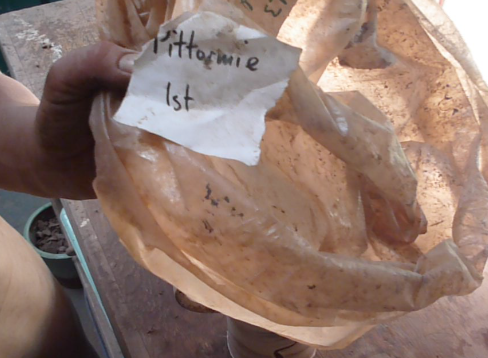
Here are six of the clays we dug and collected from around Fife. It has been dried, slaked down to a creamy consistency, sieved, settled out, dried out and wedged. Now it is resting. From a potters point of view, in terms of workability, plasticity and strength, clay "improves" with ageing or souring. It is normally recommended that clay needs two weeks to sour, but potters in Chine and Japan used to keep clay in this plastic state to pass on to future generations. Clay also improves with being wedged (similar to kneading bread dough) or pugged (similar to passing through a sausage machine).
Sunday, 3 June 2012
Plates to date

A selection of the plates to date. Pittormie, Clentrie (Puddledub), Pillars and Easter Kincaple (Seafield).
Thursday, 31 May 2012

Sunday, 27 May 2012
Test tiles fired

All the tiles survived and look good. The differences in colour is less marked now they have been fired. The clays could all be once fired with the glaze, but the structure of the plate (weak because it is flat) makes me wary of doing that, even though I have no problems doing so with the locally dug Easter Kincaple clay.

Saturday, 26 May 2012
Friday, 25 May 2012
Test tiles into kiln

The test tiles go in the kiln. You can see the lead glaze (brown) and the borax glaze (white). Below this shelf are unglazed tiles too.
Thursday, 24 May 2012


Sunday, 20 May 2012
Making test tiles

Test tiles were made of each clay. I made a stamp which had a 10cm raised line on it, so we could check the shrinkage of the clay after drying and firing. One set of tiles were to be raw glazed (once fired), and another sample biscuit fired, glazed and glaze fired. Two glazes were being tested, a borax glaze and a lead glaze.


Monday, 14 May 2012


Sunday, 13 May 2012

Tuesday, 8 May 2012

Subscribe to:
Posts (Atom)